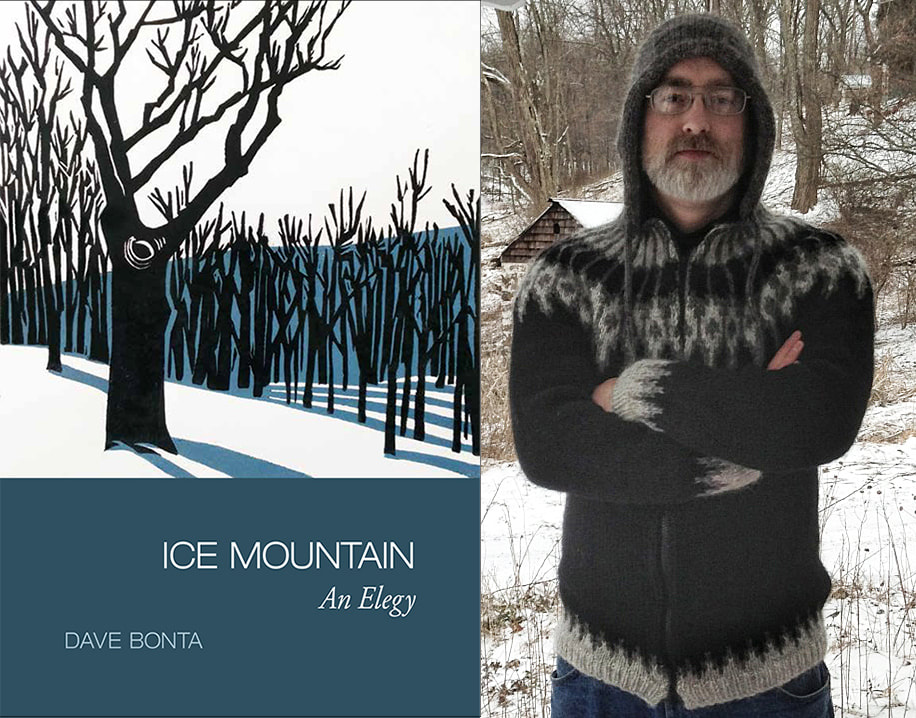
 Phoenicia Publishing is proud to announce that an excerpt, "February," from Dave Bonta's Ice Mountain: An Elegy, is our nomination for the 2017 Pushcart Prize. Dave's book was recently named a finalist (one of three) in the poetry and fiction category of the 2017 Banff Mountain Book Awards.
As editors of qarrtsiluni online literary magazine, Dave and I nominated many poets and writers for this award over the years, so I am delighted to be able to nominate Dave himself for this honor this year. Congratulations! 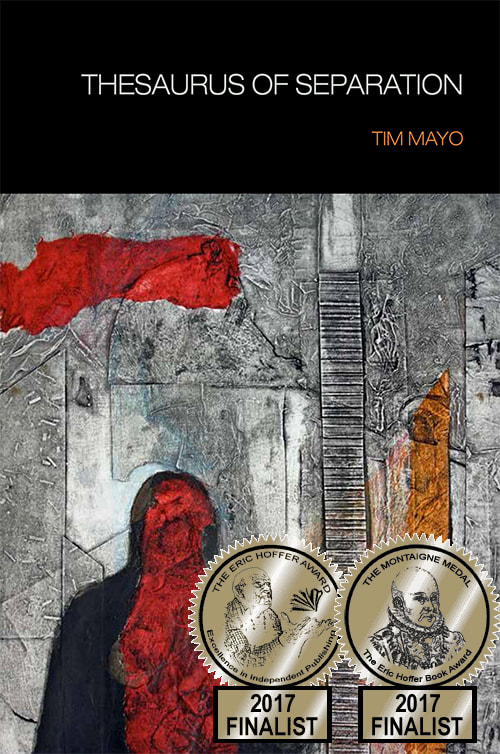 We're delighted to share the excellent news that Tim Mayo's Thesaurus of Separation has been named a finalist for both the 2017 Eric Hoffer Award and the Montaigne Medal. The Eric Hoffer Awards are one of the largest international book awards for small, academic, and independent presses.
Within the larger umbrella of the Eric Hoffer Awards, all finalists are also considered for the Montaigne Medal, given in honor of the great French philosopher Michel de Montaigne to the "most thoughtful" books -- those that "either illuminate, progress, or redirect thought." We certainly agree with that assessment of Tim Mayo's book, and are proud that Thesaurus of Separation was chosen for this distinction. Heartiest congratulations to Tim Mayo on these awards! 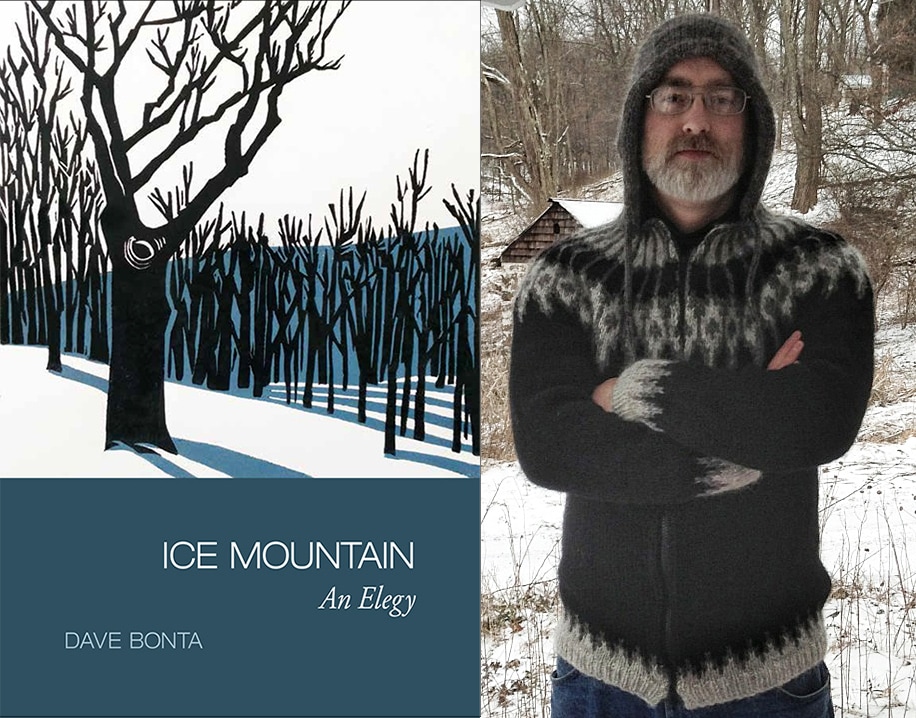 One of the great pleasures of working with our authors here at Phoenicia is that all of them, without exception, are more than just writers: they all have passionate interests that make them multi-dimensional people, and, of course, end up making their writing far more interesting. Dave Bonta has been observing the natural world since early childhood, and he's one of the best-read people I know. Whether he is leading a nature walk, being an environmental activist, explaining the spring mating of wood frogs, discussing politics, or studying the fermentation process for home-brewed beer, he's articulate, amusing, well-informed, and often unconventional. That makes him a whole lot of fun to talk to, as well as read. Central Pennsylvania radio host Jason Crane recently interviewed Dave about his new book, Ice Mountain: An Elegy. In this excellent, wide-ranging twenty-minute conversation, they discuss Dave's very specific way of observing and writing about nature; the difficulties of choosing "green" energy sources; and a whole lot more -- hope you'll listen! We are proud to announce our nominations for the 2016 Pushcart Prize. They are four poems from Thesaurus of Separation by Tim Mayo: "Mourning among Strangers," "Self-Storage", "Shelter," and "Hiroshige: near Komakata" and two essays from Monster, by Jeneva Burroughs Stone: "Brain as Variation," and "Notes on Creativity and Originality." We hope you'll join with us in congratulating Jeneva and Tim!
Poet Ren Powell (Mercy Island) talks with poet and mental health worker Tim Mayo in a fascinating podcast interview that you can listen to on SoundCloud. Ren is doing a series of podcasts with other writers , called "This Choice," in which she seeks to understand "how their work with poetry influences the choices they make in their daily lives."
In this intelligent and penetrating interview, Tim Mayo talks about his beginnings as a poet as a young man who grew up in foster care, was adopted, and then studied literature in college. After this came many years in which he did not write, for reasons he discusses. He returned to poetry later in life, able to write about those earlier experiences with some detachment, which he calls less a cathartic experience than an attempt to create, in each poem, a work of art. For him, poems tend to be narrative, and always to tell a story: his new book with Phoenicia, Thesaurus of Separation, is full of such poems. Ren and Tim also discuss the differences between "necessary solitude" and loneliness, with Tim speaking of the need for "a barrier between yourself and distraction" which he often didn't have as a younger man, as well as the development of "the inner resources necessary to sit and write on his own," speculating that the instability of his childhood might have made that impossible for him earlier on. The interview concludes with a moving reading by Tim, and discussion about what inspired and influenced those particular poems. Having worked with both Ren and Tim to publish their work, I was fascinated by this discussion, which covered territory we had not in our own meetings. It's great that Ren is doing this beautifully-produced series, and I can't recommend the podcasts highly enough for anyone who is interested in poetry and poetic process.   Phoenicia is delighted to announce the forthcoming publication (January 2017) of Dave Bonta's Ice Mountain: An Elegy. After several weeks of daily walks in the Pennsylvania mountains with a temporary canine visitor, Dave began a new series of poems: "I decided to see how much I could discover on my own, walking at a much slower pace but without the aid of a dog's nose to show me where a coyote had paused or which hollow logs might harbor rabbits or porcupines. The exploration continued when I sat down at the laptop, and I often ended up writing about things I'd remembered or thought about as I walked." But there was a darker side, too. The Ice Mountain of the title is a nearby peak that was desecrated by a large wind farm, after a six-year struggle to fight it by local environmental groups who knew the turbines would have a huge impact on bats, songbirds, migrating hawks, and other species. Written as winter gives way to spring, the resulting short, daily poems are an elegy for an endangered ecosystem, as well as a celebration of its diversity and determination. Ice Mountain will also have original linocut illustrations by Elizabeth Adams. Sales will benefit the environmental non-profit organization SOAR, Save Our Allegheny Ridges. 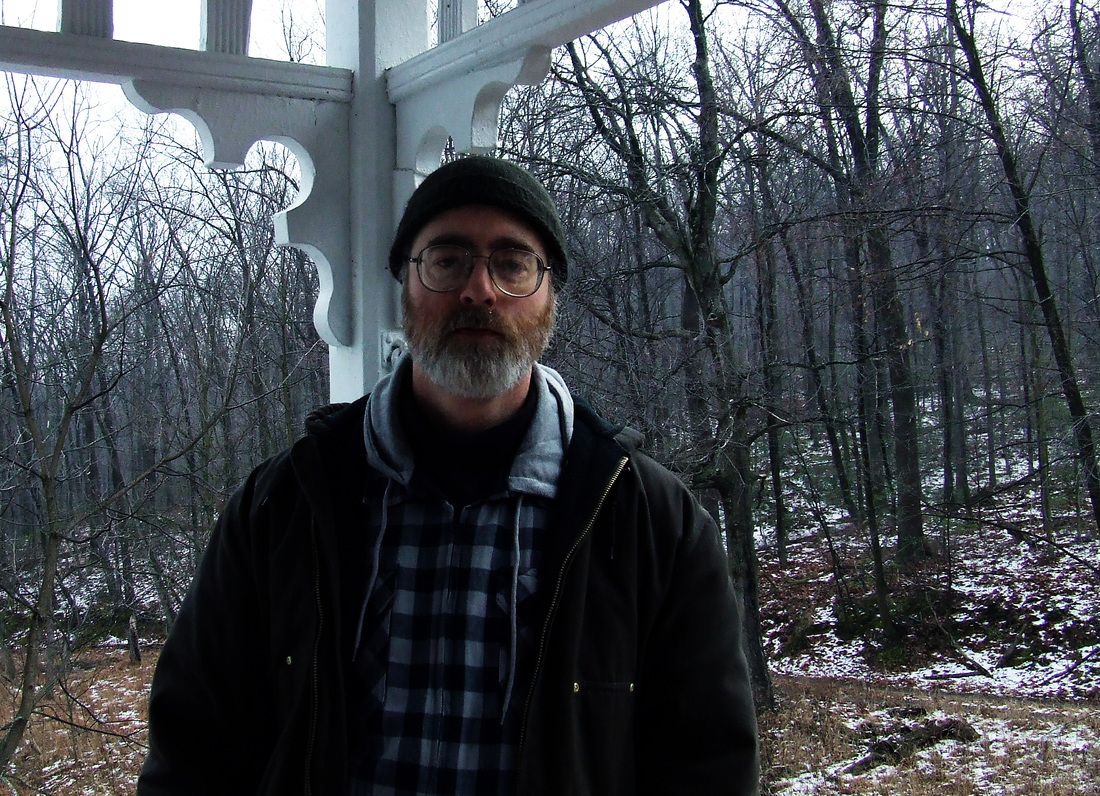 Dave Bonta is well-known for his own poetry, his longstanding blog Via Negativa, his Moving Poems website where he showcases the best work being done in video poetry, his short-form poems and commentaries at The Morning Porch, his former work as founder and co-managing editor of the literary journal qarrtsiluni, and as a tireless and enthusiastic supporter of other poets and writers. We at Phoenicia were proud to publish his chapbook Odes to Tools, in 2010, and we hope you'll join with us now in enthusiastic support of this new book and its author, who gives so generously of his time and heart in support of poetry, poets, and the appreciation and preservation of our natural world.
There will be a special pre-order price for Phoenicia newsletter subscribers, and we'll also be giving away a free copy of the book and an original print. To receive these announcements and be eligible for the giveaway, please sign up for our email list! Author photos: R. Rawlins, Illustration: E. Adams  Phoenicia editor and publisher Beth Adams was recently in New York and Brooklyn, where she and photographer Jonathan Sa'adah (How Many Roads?") visited the Danny Lyon retrospective at the new Whitney Museum of American Art. Her photo essay deals with the motivations behind the work of photographers like Lyon and Sa'adah, as well as the different paths they have taken in life, and the changes that have happened in photography since the late 1960s when those careers began.
 As author Tim Mayo grasps the trapeze bar and prepares to take flight, we're proud to announce the publication of his new book of poems, Thesaurus of Separation, on this beautiful midsummer day of July 1, 2016. Congratulations, Tim! We're all cheering for you, but no longer holding our breath: the books are available (both in a lovely paperback edition and as a downloadable .pdf) and ready to fly into the hands of readers. Please take a look! For a limited time, we're offering a 15% discount on paperback orders through our online store.
Now in my mid-sixties, my blond hair silvering at the temples like little wings, I’ve taken up flying. It happens in a farmer’s field, hidden from the road, on Sunday afternoons, the New England summer sun frowning down like a Puritan as we gather, coven-like, to practice. Think of it as a post-modern meditation on getting to heaven. from "Trapezing in God's Country," by Tim Mayo, (c)2016 New England readers will have several chances to meet Tim and hear him present his poems this summer - the first of these will be at Bookstock, in Woodstock, Vermont, on Friday, July 29 at 1:00 pm, when he'll be reading with Vermont Poet Laureate Chard deNiord at the Unitarian Universalist Church. We'll keep you posted on Tim's schedule. |
NewsThe latest news and commentary about our plans, events, authors, and titles! |


 RSS Feed