From ghosts and visitations, malevolent folk spirits, spells, incantations and curses to surrealistic takes on the present and the future -- poets love the weird, the absurd, and the supernatural. Now through November 1, receive a generous 20% off on these four poetry books, when ordered through our online store. Use coupon code MGQ8JWW when ordering. (E-store only; offer not available for Amazon orders.)
Angels & Beasts, by Claudia Serea Watermark, by Clayton Michaels: "Right now I feel so goddamn rock-and-roll -- like a grinning Keith Richards death's-head"... (from "Watermark") Journaling the Apocalypse, (qarrtsiluni vol 1.1) edited by Dave Bonta and Beth Adams Words of Power (qarrtsiluni vol 1.4) edited by Dave Bonta and Beth Adams Thanks, and Happy Halloween!  above: Clayton Michaels
All Phoenicia's poetry books are on sale through the end of April! like a neil young song Everything sounds sadder in a reed thin falsetto. Like a Neil Young song circa After the Gold Rush 1970 or 72. The words almost cease to matter when a voice is spread that thin. When with one stray syllable the entire fragile dynamic can just dissolve. Then again, sometimes when it breaks it can be far more compelling—see ‘Mellow My Mind’ from Tonight’s the Night. In a reed thin falsetto: should you ever choose to, this is how I would like you to remember me. -Clayton Michaels "Watermark" 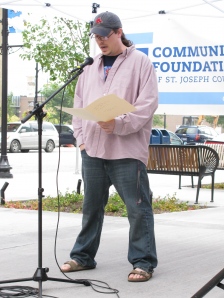 From Clayton Michaels' Watermark:
without edges These are the days that call for a bottle of Sonoma zinfandel, that beg for the black pepper, for the anise. Flavors that at least warm the mouth. I savor each sip for as long as I can, until the astringency makes my tongue feel like cotton. Snow again today, then rain, then snow. These are the days I need a woman without edges, without unexpected corners that could tear or scrape. She might taste like black pepper and anise, maybe sandalwood incense, or blackcurrant with a hint of cinnamon. All flavors to delight in and hold. We could ride out the gathering storms in bed, getting drunk, reading poetry. From a distance, the black type on the white paper looks like animal tracks on the freshly fallen snow. 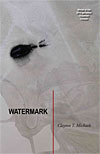  We were happy to receive word recently that two of Phoenicia's books have been ordered as texts by professors for their college poetry classes. Clayton Michaels' "Watermark," will be taught and discussed in a poetry/creative writing class, and soon-to-be-published "70 faces: Torah Poems" by Rachel Barenblat, will be used in a class on Feminist Methodologies.
One of our goals at Phoenicia Publishing is to encourage greater use of contemporary, edge-pushing texts in poetry and writing education - students respond positively to these texts, they have few of the biases of older readers against unconventional publication methods - quite the contrary - and they are encouraged by works such as Clayton's and Rachel's toward greater freedom and experimentation in their own work and thinking. We've asked the teachers to share their experiences with us after the classes have read and discussed these books, and also to allow us to publish some of the student's work -- so there will be more on this topic here in the spring! We were pleased to learn that Kristen McHenry, an excellent poet herself and one of last year's runners-up in the qarrtsiluni chapbook contest, has written a review of Clayton Michaels' "Watermark."
These poems never explain themselves, instead allowing space for the reader to wander at leisure, viewing them through their own lens, invited into the memories of sound and image. Michaels quirky, yet personable voice makes “Watermark” a strong addition to any poetry collection. Kristen's chapbook from last year, The Goatfish Alphabet, has been published by Naissance and I'm happy to recommend it to readers; I bought a copy myself and have enjoyed every poem in her strong collection. |
NewsThe latest news and commentary about our plans, events, authors, and titles! |
 RSS Feed